
Isolated Event
A contained occurrence with a reasonably clear cause, time frame, and direct response that fits.
What occurred?
A free 20-minute first systemic read for coaches, consultants, and organizational leaders.
Choose one recurring problem. Bring what you already know about it. The RPA helps you determine whether the visible explanation appears sufficient, where evidence of systemic pressure may be present, and what deserves investigation next.
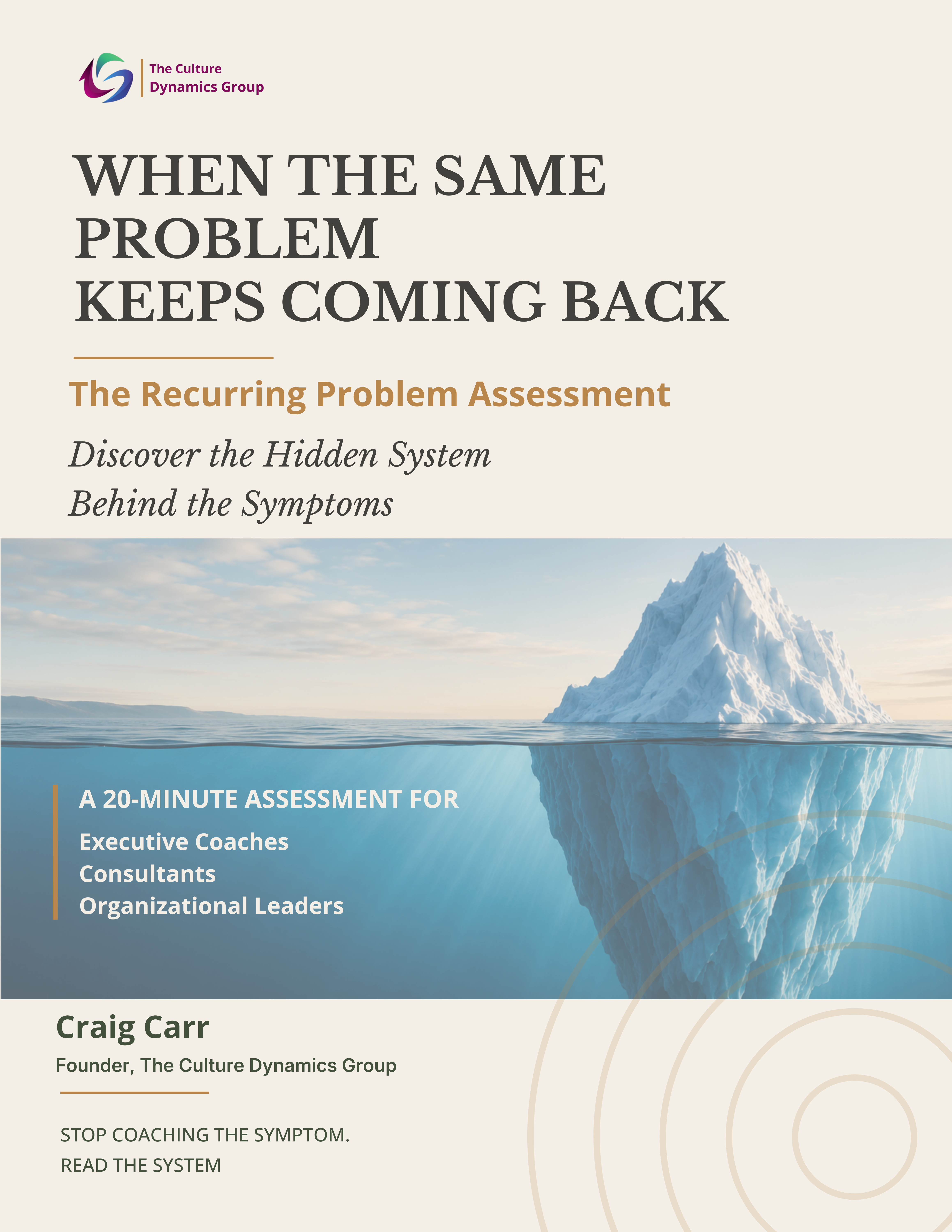
A recurring problem does not automatically mean there is a hidden systemic cause. Sometimes the issue is contained. Sometimes a process, role, or design problem keeps reproducing the same outcome. And sometimes the recurrence points toward wider system conditions that deserve investigation.
The RPA helps you make that distinction before you reach for another intervention.
A contained occurrence with a reasonably clear cause, time frame, and direct response that fits.
What occurred?
Similar organizational conditions repeatedly produce similar behaviors or outcomes, even when details change.
What keeps occurring?
The pattern persists despite reasonable attempts to address it, or wider conditions involving culture, authority, history, loyalty, silence, or other systemic forces may be sustaining it.
What else may be organizing the recurrence?
The presenting issue tells you where the strain is visible. It does not necessarily tell you where the conditions sustaining it are located.
may be partly about what can and cannot safely be said.
may be partly about responsibility without enough authority, support, or role clarity.
may be carrying pressure produced somewhere else in the structure or relationship system.
may persist because the operating reality quietly rewards avoidance or makes ownership unusually costly.
Return to the RPA when a problem resurfaces, changes form, moves to another part of the system, or persists despite a reasonable intervention.
Each use strengthens the habit of reading beneath the symptom instead of reacting only to the latest episode.
You do not need another generic culture quiz. You need a disciplined way to examine whether the explanation you have been working with is large enough.
Inside you’ll find a guided assessment, a simple score profile, and next-step prompts you can use with one live recurring problem.
The RPA helps you see where to look.